Halloween GEOMETRICAL Digital Patterns
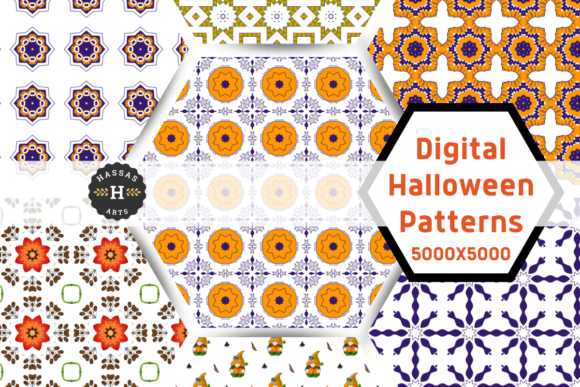
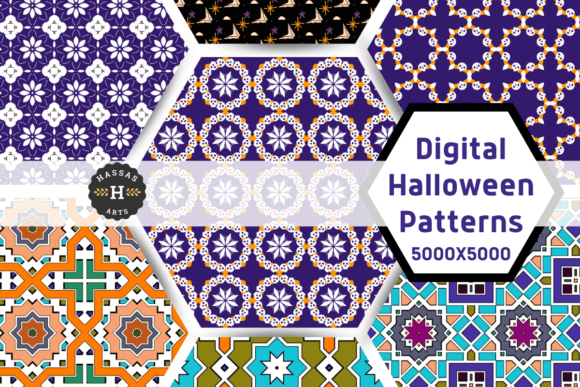
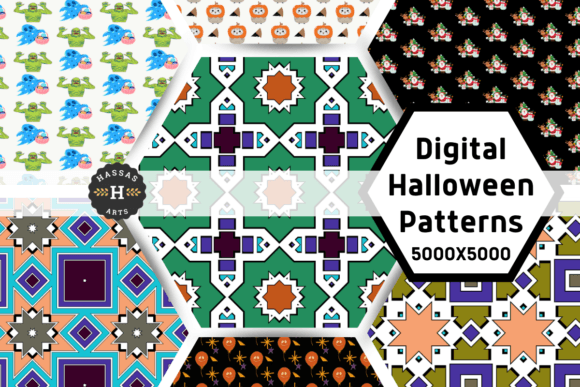
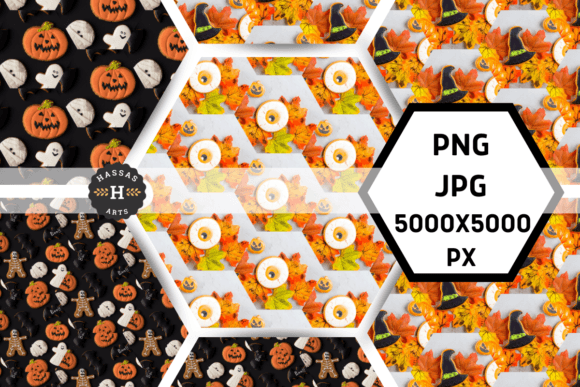
Halloween GEOMETRICAL Digital Patterns are high-resolution, scalable design assets—delivered as PNG and JPG files at 5000×5000 px—that merge the precision of geometry with the playful energy of Halloween. Unlike static clipart or generic seasonal graphics, these patterns feature intentional repetition, symmetry, angular rhythm, and thematic motifs—think interlocking jack-o’-lantern silhouettes, tessellated bats, hexagonal cauldrons, or fractal-inspired spiderwebs. They’re not just decorative; they’re functional building blocks for creators who value consistency, modularity, and visual cohesion across physical and digital outputs.
Where These Patterns Fit Into Your Creative Workflow
Halloween GEOMETRICAL Digital Patterns sit at the intersection of planning and execution—not as an afterthought, but as a foundational layer. For educators designing classroom bulletin boards, they serve as repeatable backdrops that unify lesson themes without requiring custom illustration time. For small business owners launching limited-edition packaging, they become seamless wrap-around textures for labels, mailers, or product inserts—applied in minutes instead of days. Freelance designers use them as non-destructive overlay layers in Photoshop or Illustrator to add tactile depth to mockups before client review. The key is timing: integrating them early in the asset pipeline avoids last-minute texture compromises or inconsistent scaling.
Before the Project: Preparation and Selection
Start by auditing your output requirements. Will you print on matte cardstock for garlands? Vinyl for window decals? Vellum for layered lanterns? Each substrate responds differently to line weight, contrast, and pattern density. Halloween GEOMETRICAL Digital Patterns are optimized for clarity at multiple scales, but previewing at actual print size (not just screen zoom) prevents fine details from disappearing on textured paper or bleeding on low-DPI printers. Organize downloads by motif type (e.g., “angular,” “modular,” “fractal”) and color mode (RGB for screens, CMYK-ready for print). Tag filenames with resolution and intended use—halloween-geometric-bats-5000px-print.png—to accelerate retrieval during tight deadlines.
During the Project: Integration and Adaptation
These patterns aren’t meant to be used as-is in every context. Their real utility emerges when adapted. In Adobe InDesign, apply them as swatches for paragraph rules or object fills—then adjust scale and offset to match layout rhythm. In Canva, upload as background images and use the “transparent background” toggle to layer over photos or text blocks without muddying contrast. For physical crafts, import into Cricut Design Space or Silhouette Studio, ungroup repeated elements if needed, and isolate individual shapes for cutting. Because each file is 5000×5000 px, resizing down preserves sharpness; enlarging beyond native dimensions isn’t necessary—and rarely advisable.
Compatibility extends beyond software. Halloween GEOMETRICAL Digital Patterns work alongside vector illustrations, hand-lettered typography, and photography. Try overlaying a subtle geometric bat pattern at 8% opacity over a moody photo backdrop to imply texture without competing for attention. Or align a repeating triangular motif with the edge of a banner to create visual continuity between printed signage and digital social posts. This cross-medium flexibility means one download supports cohesive branding across email headers, Instagram stories, and tabletop centerpieces—reducing cognitive load and ensuring recognizability.
After the Project: Reuse, Repurpose, Archive
Unlike disposable templates, Halloween GEOMETRICAL Digital Patterns are built for longevity. Store them in a dedicated cloud folder with clear version control (e.g., “v2024-Q4-halloween-geometric-patterns”). Rename variants with usage notes: halloween-geometric-pumpkin-tessellation-cmyk-safe.png. When repurposing for next year’s campaign, swap out orange/black palettes via global color swatches in design apps—no need to re-download or re-rasterize. For educators, save cropped sections as flashcard borders or worksheet dividers; for marketers, extract single units as social media post accents or newsletter bullet points. Consistency compounds: using the same underlying geometry across years builds subtle brand equity, especially for seasonal businesses like haunted house operators or craft subscription boxes.
Practical Implementation Tips for Real Workflows
- Batch processing saves time: Use Lightroom or XnConvert to apply consistent color adjustments (e.g., desaturate blues for vintage tones, boost contrast for vinyl cutting) across all downloaded patterns at once.
- Test print before mass production: Print a 4×6 inch sample on your target paper stock. Check for banding, ink bleed, or unintended transparency—especially where black meets white in high-contrast patterns.
- Layer intelligently: Place patterns on separate layers in your design file and name them clearly (e.g., “BG-Geometric-Overlay,” “FG-Cutline-Shape”). This makes revisions faster and collaboration smoother.
- Leverage grid systems: Align pattern repeats to your document’s baseline grid or modular scale. A 12-column layout pairs cleanly with hexagonal or dodecagonal patterns; a Fibonacci-based grid works with spiral or branching geometries.
- Preserve accessibility: Avoid relying solely on pattern contrast to convey information. Pair Halloween GEOMETRICAL Digital Patterns with clear typography and sufficient color contrast—especially for educational or public-facing materials.
Quality Control and Long-Term Usability
Each Halloween GEOMETRICAL Digital Pattern undergoes resolution validation, edge alignment testing, and color fidelity checks across common monitors and printers. That 5000×5000 px dimension isn’t arbitrary—it ensures clean output at up to 300 DPI on large-format prints (24×24 inches) while remaining lightweight enough for quick web uploads. No embedded fonts, no hidden layers, no proprietary compression. What you download is what you use—immediately, reliably, without licensing friction.
Long-term usability also hinges on organization. Maintain a master spreadsheet linking each pattern filename to its primary use case, compatible software, and any known limitations (e.g., “best at 25–75% scale,” “avoid on glossy photo paper”). Update it annually as tools evolve—like when Figma introduced native pattern fills, making direct import faster than ever. This kind of documentation turns a one-time download into a living part of your creative infrastructure.
Who Benefits Most—and How
Professionals managing seasonal campaigns appreciate how Halloween GEOMETRICAL Digital Patterns compress research, sketching, and iteration time. Bloggers embed them as subtle background textures behind recipe cards or DIY tutorials—adding atmosphere without distracting from content. Educators print them on sticker paper for interactive learning games: students match pattern units to symmetry terms or calculate angles within a pentagram motif. Small business owners use them to prototype packaging concepts before committing to expensive plate charges. Even productivity-focused users integrate them into printable planners—using geometric borders to segment weekly goals or habit trackers with thematic resonance.
The common thread isn’t just aesthetics—it’s efficiency rooted in intentionality. These patterns eliminate guesswork about scale, alignment, and thematic fit. They don’t replace creativity; they remove friction so you spend less time troubleshooting alignment and more time refining messaging, testing layouts, or engaging your audience. That shift—from solving technical problems to solving human ones—is where Halloween GEOMETRICAL Digital Patterns deliver measurable workflow value.