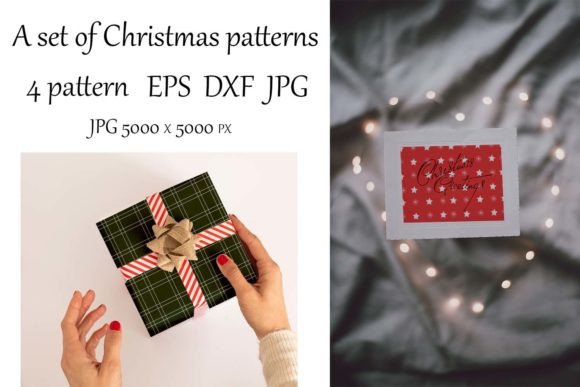
A Set of Christmas Patterns
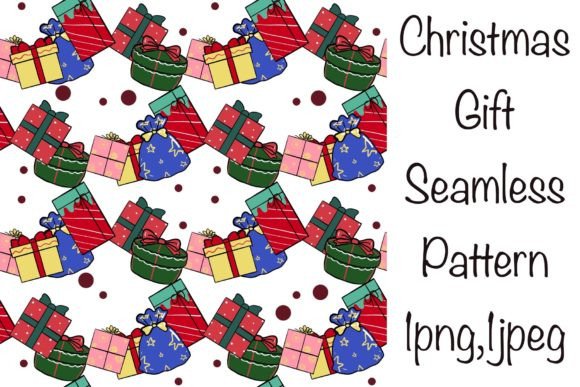
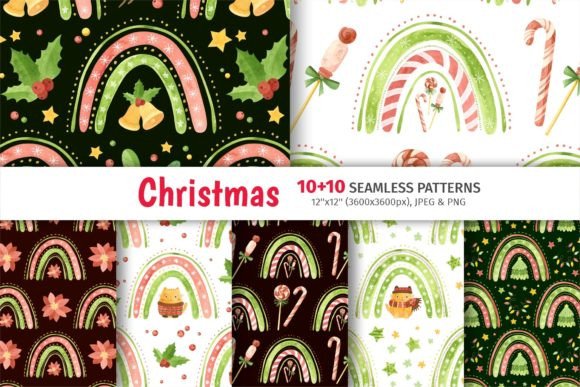
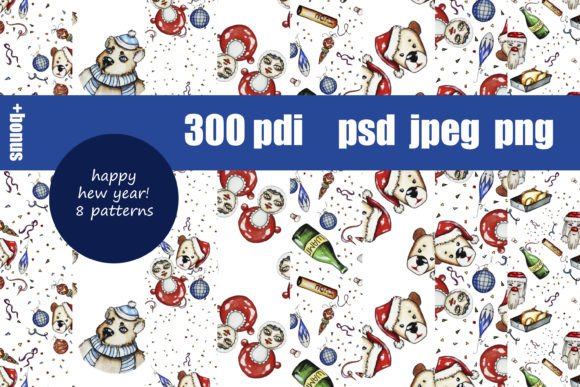
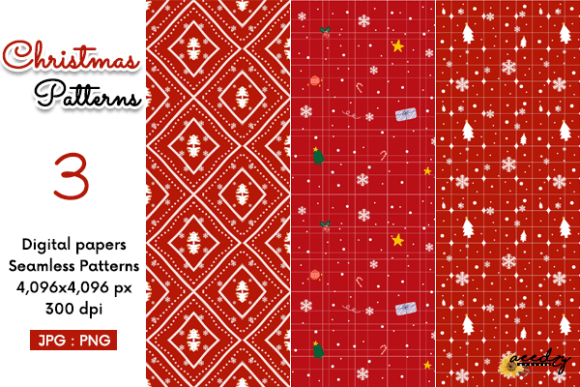
Whether you’re printing festive pillowcases, designing holiday greeting cards, or launching a limited-edition apparel line, A Set of Christmas Patterns offers a versatile, ready-to-use foundation—especially if you need clean, scalable, and print-ready assets. This particular set features four cohesive red-and-green pattern illustrations, delivered in EPS, DXF, and high-resolution JPG formats (300 DPI, 5000 × 500 px). That combination makes it unusually adaptable—not just for digital use, but for physical production across textiles, packaging, signage, and more.
Why this set stands out—and why assumptions can backfire
Many creators assume “Christmas patterns” are interchangeable: pick any red-and-green repeat, drop it into Canva, and call it done. But that shortcut often leads to mismatched scale, blurry prints, or licensing confusion. For example, a blogger sourcing free SVGs online might unknowingly download low-DPI files that pixelate on fabric labels—or worse, use patterns with unclear commercial rights when selling handmade ornaments. A Set of Christmas Patterns avoids those pitfalls by bundling vector (EPS), cut-file (DXF), and raster (JPG) formats in one consistent color scheme and resolution. That means you’re not guessing whether your file will hold up on a 24-inch banner or a 2-inch sticker.
1. Format ≠ universal usability
Just because a file is labeled “EPS” doesn’t guarantee compatibility. Older versions of Illustrator may struggle with complex gradients or embedded fonts—even if the file opens, editing flexibility could be limited. Likewise, DXF files from some sources omit layers or use unsupported path types, causing issues in Cricut Design Space or Silhouette Studio. With A Set of Christmas Patterns, all EPS and DXF files are built using standard paths and flattened transparency, tested across Adobe CC 2020+, CorelDRAW, and major cutting machines. Before importing, verify your software version supports AI-compatible EPS—not just “EPS” as a label.
2. Resolution matters beyond screen display
The included JPGs are 5000 × 500 px at 300 DPI—a deliberate choice. That width supports large-format printing (e.g., 16.6″ wide at 300 DPI), while the 500-pixel height maintains crisp tiling without excessive file bloat. Some users mistakenly stretch smaller JPGs to fill banners, resulting in visible interpolation artifacts. Others overlook that 500 px height means the pattern repeats every ~1.66 inches at full resolution—critical when aligning seams on fabric or wrapping paper. Check your intended output size first: if you need seamless tiling at 12″ intervals, confirm the repeat unit fits cleanly within the 5000 px width before scaling.
3. Color fidelity isn’t automatic
Red-and-green palettes vary widely—true scarlet vs. brick red, forest green vs. lime-tinged emerald. Monitors display colors differently, and uncalibrated screens can mislead your perception of contrast or warmth. The red and green in A Set of Christmas Patterns are defined in CMYK and RGB with intentional saturation balance, optimized for both screen presentation and spot-color printing. If you’re ordering fabric through Spoonflower or Printful, soft-proof the JPG against their color guides first. Better yet: order a physical swatch before bulk production. A $5 test print prevents $200 in mismatched holiday scarves.
Where this set shines—and where it’s not the answer
A Set of Christmas Patterns excels in consistency-driven workflows: think branding kits for small-batch gift shops, nursery wall decals requiring precise alignment, or social media templates needing uniform borders across Instagram posts and Pinterest pins. Its narrow 500 px height makes it ideal for horizontal applications—website headers, wrapping paper rolls, tote bag bands, or digital scrapbook papers.
It’s less suited for vertical repeats (e.g., wallpaper murals or tall textile panels) unless you manually mirror or rotate tiles. And while the four illustrations share a unified palette, they aren’t designed as modular elements—you won’t find isolated holly sprigs or standalone baubles to rearrange freely. If your project demands highly customizable components, supplement this set with single-element vectors—but keep A Set of Christmas Patterns as your anchor for rhythm and cohesion.
Before you download, buy, or apply: five quick checks
- Verify your end use matches the license. This set permits commercial use—including resale of physical products—but prohibits redistribution of the raw files. Selling printed tea towels? Fine. Reselling the EPS as your own “pattern pack”? Not allowed.
- Open one file in your primary design tool before committing. Try placing the EPS at 100% scale in Illustrator or InDesign. Does it render crisply? Does the DXF import cleanly into your cutting software without auto-tracing prompts?
- Compare the JPG’s white background to your substrate. These files use transparent-friendly white space—not pure #FFFFFF. If printing on kraft paper or off-white fabric, preview how the lightest areas interact with your base material.
- Test tile continuity. Duplicate the JPG twice horizontally in Photoshop, then use “Offset” (Filter > Other > Offset) with X set to 5000 px. Look for seam lines or color shifts at the join—there shouldn’t be any.
- Check metadata and naming. Reliable sets include clear filenames (e.g., christmas_pattern_holly_redgreen_01.eps) and embed copyright info. Vague names like “design123.ai” or missing creator credits are red flags for inconsistent quality or unclear ownership.
Ultimately, A Set of Christmas Patterns works best when treated as a precision tool—not a decorative afterthought. It saves time not because it’s “easy,” but because its technical execution reduces trial-and-error: no re-rasterizing, no format conversions, no last-minute panic over bleed or registration. Whether you’re prepping for Etsy’s holiday rush or designing staff appreciation cards for your school, clarity in format, color, and licensing lets you focus on what matters most—your idea, your audience, and the quiet satisfaction of something made well.