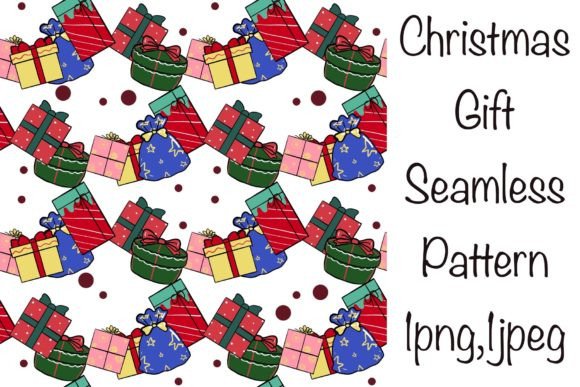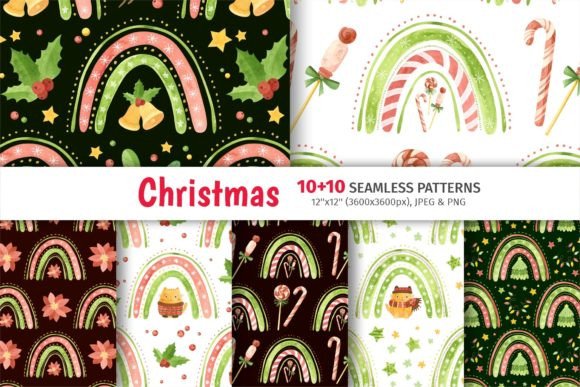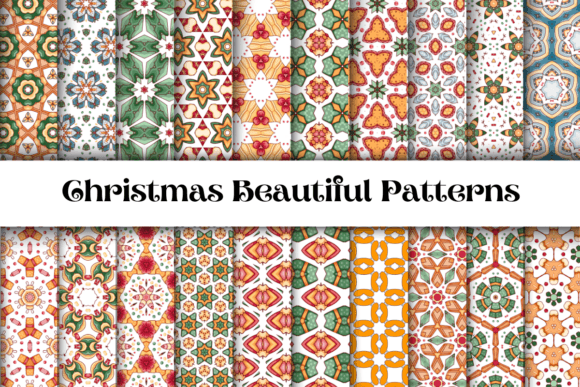
Christmas Beautiful Patterns: Versatile Digital Papers for Meaningful Design Projects
Designers, crafters, educators, and small business owners increasingly rely on high-quality digital assets to elevate their creative output—especially during seasonal peaks like Christmas and Valentine’s Day. Among the most adaptable resources available are Christmas Beautiful Patterns: a curated set of five richly textured, holiday-inspired digital papers designed not only for festive aesthetics but also for functional versatility across media and disciplines. Unlike generic clipart or overused stock textures, these patterns offer cohesive visual language—subtle yet expressive, traditional yet modern—that supports intentionality in design without sacrificing warmth or authenticity.
What Makes These Patterns Distinctively Useful?
The strength of Christmas Beautiful Patterns lies in its thoughtful balance of aesthetic cohesion and practical flexibility. Each pattern is built around classic holiday motifs—think delicate holly sprigs, minimalist snowflakes, soft plaid overlays, vintage ornaments, and gentle candy cane stripes—but rendered with restrained color palettes (deep forest greens, warm burgundies, ivory creams, and muted rose tones) that avoid visual fatigue. This restraint ensures longevity beyond December: a snowflake motif works equally well as a subtle background for a January newsletter, while a holly-and-ivy repeat translates gracefully into spring wedding stationery when recolored.
Crucially, these aren’t just decorative flourishes. They’re engineered for performance: every pattern repeats seamlessly, scales without distortion, and maintains clarity at both screen and print resolutions. That technical reliability transforms them from “nice-to-have” embellishments into foundational elements—like typography or grid systems—in a designer’s workflow.
Real-World Applications Across Creative Domains
Because Christmas Beautiful Patterns come in three optimized file formats—PNG, JPG, and PDF—each tailored for specific use cases—they integrate smoothly into diverse creative pipelines. Below are concrete examples illustrating how different users apply them meaningfully:
- Scrapbookers & Memory Keepers: Use the high-resolution PNG files (3000×2000 px) as layered backgrounds in digital scrapbooking software like Photoshop or CraftArtist. The transparency support in PNGs allows easy blending with photos, journaling blocks, or die-cut overlays—ideal for preserving family holiday traditions in tactile, story-driven albums.
- Educators & Curriculum Designers: Print the PDF versions onto cardstock to create tactile learning tools—patterned flashcards for color theory, themed writing prompts for seasonal storytelling units, or illustrated vocabulary posters. The consistent scale (3000×2000 px) means designs retain legibility even when enlarged for classroom displays.
- Small Business Owners & Makers: Integrate JPG files into Canva or Adobe Express templates for printable product labels, gift tags, or social media banners. Because each pattern is sized to match standard web dimensions, resizing for Instagram posts or Etsy shop headers requires minimal adjustment—reducing time spent on technical prep and increasing focus on messaging and brand voice.
- Web Designers & UX Practitioners: Apply the patterns as CSS background images or SVG fills for hero sections, email newsletter headers, or interactive holiday landing pages. Their seamless tiling behavior eliminates visible seams, while the 3000×2000 px resolution accommodates retina displays and responsive breakpoints without pixelation.
- Stationery Designers & Wedding Planners: Combine multiple patterns within a single layout—for instance, using a subtle plaid as an envelope liner texture and a bolder ornament repeat as a ceremony program border. The shared color harmony across all five designs ensures visual consistency even when mixing motifs, supporting cohesive brand experiences for clients.
Why File Format Diversity Matters More Than You Might Think
Many designers overlook how deeply file format choice impacts workflow efficiency and final output quality. With Christmas Beautiful Patterns, the inclusion of three distinct export types isn’t arbitrary—it reflects real-world constraints and opportunities:
The PNG files preserve alpha channels, making them indispensable for layered compositing. When designing greeting cards with embossed foil effects or shadowed text overlays, PNGs allow precise control over blending modes and opacity—something JPGs cannot support. Their lossless compression also retains fine detail in intricate linework or gradient transitions found in hand-drawn-style patterns.
The JPG files, optimized for web use, strike a smart balance between fidelity and load speed. At 3000×2000 px, they provide ample resolution for full-width website headers or high-DPI mobile displays while remaining under typical CMS upload limits. Designers embedding them directly into WordPress themes or Shopify store banners benefit from predictable rendering across browsers and devices.
The PDF files go beyond simple print readiness. Each is set to CMYK color space with embedded bleed guides and crop marks—features essential for professional offset printing. Hobbyists printing at home also appreciate the PDF’s vector-friendly structure; scaling up to A3 or letter size introduces no interpolation artifacts, unlike raster-only workflows.
Strategic Integration Into Broader Design Systems
Seasonal patterns shouldn’t exist in isolation. Savvy creators treat Christmas Beautiful Patterns as modular components within larger visual systems. For example:
- A university communications team might pair one pattern with their institutional font and primary brand colors to produce unified holiday email campaigns—maintaining recognition while signaling seasonal goodwill.
- A textile artist prototyping holiday-themed fabric prints could extract color swatches directly from the patterns using eyedropper tools, then translate those hex values into dye recipes or embroidery thread charts.
- A nonprofit developing donor appreciation materials might layer a soft snowflake pattern beneath semi-transparent donor name lists—adding visual interest without compromising readability or accessibility contrast ratios.
This kind of strategic reuse underscores a key principle: great patterns serve function first. They don’t shout for attention—they support hierarchy, guide the eye, and reinforce emotional resonance through subtlety.
Considerations for Ethical and Inclusive Implementation
While Christmas Beautiful Patterns carry strong cultural associations, responsible usage involves mindful adaptation. Designers working in multicultural or interfaith contexts often modify saturation levels, isolate neutral motifs (e.g., snowflakes over religious symbols), or combine them with inclusive seasonal elements like winter solstice imagery or universal celebration icons (candles, evergreens, shared meals). The absence of overt religious iconography in this set makes such adaptations especially straightforward.
Equally important is accessibility awareness. When applying patterns as backgrounds behind text, ensure sufficient contrast—particularly if using darker patterns with light-colored copy. Tools like WebAIM’s Contrast Checker help verify compliance with WCAG 2.1 standards. Likewise, avoid animated GIF versions (not included here) that could trigger photosensitive epilepsy; static, high-fidelity patterns inherently support safer digital environments.
Long-Term Value Beyond the Holiday Season
One frequently underestimated advantage of thoughtfully designed pattern sets is their extended utility. The five patterns in Christmas Beautiful Patterns share structural DNA—consistent line weights, proportional spacing, and harmonized scale relationships—that enables cross-seasonal reinterpretation. A holly-and-ivy repeat becomes botanical wallpaper in April with a hue shift; a plaid pattern reads as academic regalia in September; snowflakes morph into confetti for graduation announcements.
This adaptability reduces reliance on disposable trend-based assets and supports sustainable creative practice—both environmentally (fewer downloads, less server strain) and professionally (less time spent sourcing new resources each quarter). It also encourages deeper engagement with design fundamentals: repetition, rhythm, contrast, and negative space—all observable and manipulable within these patterns.
Getting Started Without Overwhelm
For newcomers, the simplest entry point is selecting one pattern as a “base layer” in your next project—whether that’s a printed photo album cover, a Canva invitation, or a Figma wireframe background. Experiment with opacity (try 10–25% for texture without distraction), overlay blending modes (Soft Light or Multiply often enhance depth), or cropping to emphasize rhythm over motif. As confidence grows, layer two patterns—one at full opacity for structure, another at low opacity for nuance—to build dimensionality reminiscent of letterpress or textile layering.
No specialized software is required. Even free tools like Photopea (a browser-based Photoshop alternative) or Google Slides (with image background settings) handle these files effectively. The consistent 3000×2000 px dimensions mean drag-and-drop placement rarely demands resizing—lowering barriers for educators, volunteers, and non-designers alike.
In essence, Christmas Beautiful Patterns represent more than seasonal decoration. They’re precision-crafted tools—tested across platforms, refined for clarity, and built to empower meaningful communication, whether you’re designing a child’s first holiday card or launching a boutique e-commerce site. Their value emerges not from novelty, but from reliability, adaptability, and quiet intentionality.