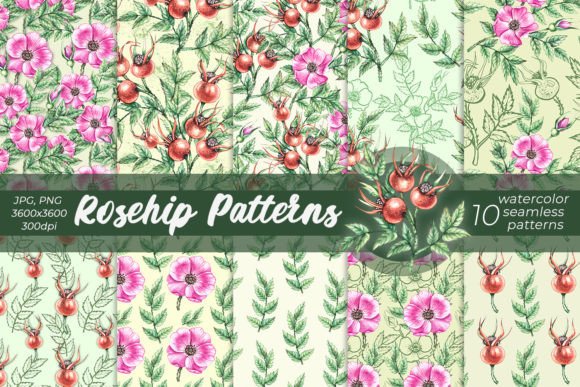
Watercolor Rosehip Patterns PNG, JPG
Watercolor Rosehip Patterns PNG, JPG is a thoughtfully curated collection of hand-drawn botanical motifs—rosehip leaves, delicate flowers, and plump berries—rendered in soft, expressive watercolor textures. There’s no digital harshness here: edges bleed gently, pigment pools subtly, and each element carries the warmth and imperfection of real brushwork on paper. The patterns feel grounded, natural, and quietly elegant—not fussy, not overdesigned, but rich with quiet detail and organic rhythm. That authenticity is what makes them resonate across so many creative contexts.
Why These Patterns Work Where Others Fall Short
Many botanical pattern sets lean into either hyper-realism or flat vector minimalism—but Watercolor Rosehip Patterns PNG, JPG occupies that rare middle ground: painterly enough to feel handmade, structured enough to tile seamlessly. Each of the 10 included patterns repeats cleanly at 6000×6000 pixels, whether as high-res JPEGs for print or transparent-background PNGs for layered digital work. That resolution means you can scale them confidently—from a tiny notebook border to a full-yard fabric print—without pixelation or loss of subtlety.
The rosehip motif itself adds quiet narrative weight. It’s not just decorative; it evokes resilience (rosehips thrive in cooler seasons), nourishment (they’re vitamin-rich), and understated beauty—qualities that translate well into wellness branding, artisanal packaging, or slow-living stationery. Unlike generic florals, this set avoids cliché by focusing on one cohesive plant family, giving your designs visual continuity without repetition fatigue.
Real Projects, Real Results
Designers use Watercolor Rosehip Patterns PNG, JPG most often in tactile, human-centered applications. Think: a small-batch soap label where the soft berry tones echo the product’s natural ingredients; a wedding invitation suite where the watercolor texture complements calligraphy and linen paper; or a boutique clothing line’s scarf print, where the seamless repeat flows naturally across fabric grain. Crafters integrate the PNG files directly into Cricut or Silhouette projects for custom greeting cards, while publishers drop them into editorial layouts for chapter dividers or section headers in botanical-themed eBooks.
We’ve seen these patterns elevate digital scrapbooking kits—especially when layered under handwritten journaling or photo overlays—because the transparency lets underlying textures show through. In fashion design, they’re used as base prints for lining fabrics or as subtle background elements behind bolder embroidery motifs. Even marketers repurpose single elements (like an isolated rosehip berry) as branded social media icons or email newsletter accents—small touches that build recognition without shouting.
What’s Inside—and Why Resolution Matters
- 10 seamless watercolor patterns—each built from original hand-drawn rosehip components, then digitally refined for flawless tiling
- 10 high-resolution JPEGs (6000×6000 px, 300 DPI)—ideal for professional printing on fabric, packaging, or stationery
- 10 transparent-background PNGs (6000×6000 px)—ready for layering in Photoshop, Procreate, Canva, or Illustrator without clipping masks or white edges
That 6000×6000 size isn’t overkill—it’s practical. A 12×12 inch printed textile swatch at 300 DPI needs ~3600 pixels per side. At 6000×6000, you retain headroom for cropping, rotating, or scaling down without quality loss. And because each file is truly seamless (not just “seamless-ish”), you won’t hit visible joins when repeating across large surfaces like wallpaper or gift wrap.
How to Use Them Without Overcomplicating Things
Start simple: pick one pattern that matches your project’s mood. A looser, leaf-heavy repeat works beautifully as a background for minimalist typography on a café menu. A denser berry-and-flower combo adds richness to a holiday gift tag or fabric tote bag. Don’t feel pressured to use all 10 at once—most strong designs rely on restraint.
If you’re pairing with type, lean into contrast. Let the softness of the watercolor breathe beside clean, modern sans serifs (think Inter, Poppins, or Montserrat) for balance. For invitations or notebooks, try a gentle serif like Cormorant Garamond or Playfair Display—their structure holds up against the fluidity of the patterns without competing.
Test readability early: place light-colored text over a pale rosehip wash, then darken the overlay slightly if needed. Watercolor Rosehip Patterns PNG, JPG aren’t meant to dominate—they’re atmospheric support. Their strength lies in enhancing, not obscuring.
Licensing You Can Trust
This is a commercial-use collection—no hidden restrictions. You can apply these patterns to physical products you sell (apparel, mugs, calendars), digital goods (Canva templates, printable planners), client work (branding packages, web banners), or even NFT-based art (as long as the patterns aren’t sold standalone). No attribution required, though crediting the source is always appreciated in creative communities.
What it doesn’t cover: reselling the raw pattern files as your own, or using them in logo marks where the pattern becomes the sole identifier (logos need scalability and uniqueness that seamless repeats rarely provide). But for everything else—packaging, textiles, stationery, social assets, editorial layouts—it’s built for real-world use, not theoretical flexibility.
When to Choose This Over Other Botanical Sets
If your brand values tactility, seasonality, or quiet sophistication, Watercolor Rosehip Patterns PNG, JPG fits more naturally than sharp-lined vectors or overly saturated digital florals. It’s especially effective when your audience responds to craft, sustainability, or heritage aesthetics—think herbal apothecaries, indie bookshops, mindful lifestyle blogs, or eco-conscious apparel labels.
You’ll know it’s right when you see how easily it moves between mediums: the same rosehip leaf pattern that looks lovely on a cotton tea towel also reads clearly as a subtle watermark behind a blog post header. That cross-medium adaptability is rare—and valuable.
Ultimately, these aren’t just “pretty backgrounds.” They’re design assets with intention: rooted in real botany, made with care, and built to serve your work—not distract from it.