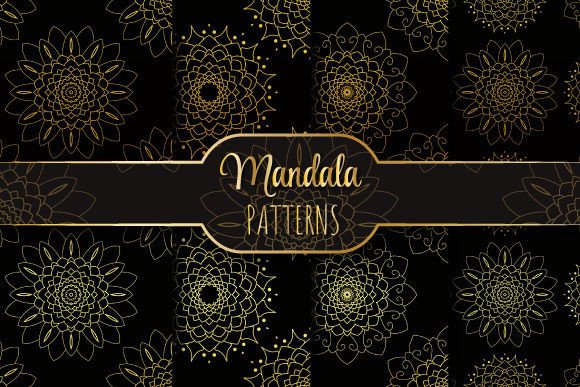
Shiny Mandala Patterns: Seamless, Scalable Design Resources for Real Creative Work
Shiny Mandala Patterns are more than just decorative motifs—they’re production-ready, seamlessly repeating vector designs built for versatility and precision. Each pattern is crafted at 12 × 12 inches (3600 × 3600 pixels, 300 dpi), ensuring crisp detail whether printed on fabric, etched onto stationery, or scaled across a mural. Delivered as an EPS 10 file with four high-res JPEG previews, the zip package gives you both editable vector flexibility and immediate-use raster options—no guesswork, no compatibility hiccups.
Where These Patterns Fit Into Everyday Creative Work
Think of Shiny Mandala Patterns as quiet problem-solvers—not flashy tools, but reliable assets that slot into real projects without friction. A textile designer in Portland uses them to mock up silk scarf repeats before sending files to a mill. A wedding stationer in Austin layers one over cream cardstock to create elegant, shimmering invitation borders—then exports the JPEG for quick client PDF proofs. A small-batch ceramicist in Asheville traces the vector outline into her laser cutter software to engrave subtle mandala motifs onto porcelain mugs. None of these users needed to draw from scratch, adjust tile boundaries, or wrestle with alignment—because “seamlessly repeating” isn’t a marketing phrase here. It’s baked in.
Designers Who Rely on Predictable, Print-Ready Repeats
If your workflow involves print-on-demand services, fabric printing, or packaging design, consistency matters more than complexity. Shiny Mandala Patterns eliminate the risk of visible seams or misaligned edges when tiled—something that’s easy to miss on screen but glaring in physical output. One freelance surface pattern designer told us she tested three different mandala sets before settling on this one: “The EPS file opened cleanly in Illustrator CC *and* Affinity Designer, and the repeat grid snapped perfectly into my repeat swatch panel—no nudging, no invisible gaps.” That reliability saves hours across dozens of product SKUs, especially when scaling from business cards to tote bags.
Small Business Owners Building Brand Texture
You don’t need to be a full-time designer to use these well. A yoga studio owner in Boulder licensed one of the patterns to overlay lightly on her class schedule PDFs and workshop handouts—adding visual cohesion without overwhelming clean typography. A boutique candle maker in Nashville used a metallic-toned Shiny Mandala Pattern as a subtle background layer behind her logo on labels, then printed it on kraft paper using a spot UV process. The result? A tactile, elevated feel customers noticed (“I love how the design catches the light!”), even though it was applied with minimal effort.
Educators and Workshop Leaders with Tight Timelines
Art teachers preparing lesson plans, community center staff designing event banners, or nonprofit coordinators building awareness materials often face tight deadlines and limited design support. With Shiny Mandala Patterns, they get professional-grade visuals without needing advanced software skills. One middle school art teacher shared how she imported the JPEG version directly into Canva, resized it to fit a 24 × 36 inch poster canvas, and added student-drawn mandala outlines on top—turning a single pattern into a collaborative classroom project. The EPS file stayed safely archived for future reuse, while the JPEG got the job done fast.
What to Consider Before You Download or Apply
While Shiny Mandala Patterns deliver strong out-of-the-box utility, thoughtful use makes all the difference:
- Color adaptation matters. The JPEG previews show suggested palettes—but since the EPS is vector-based, you can recolor any element instantly in Illustrator or InDesign. If you’re matching brand guidelines, test how the pattern behaves with your primary and secondary hues before committing to large-format prints.
- Scale changes perception. A mandala that reads beautifully at 2 inches tall on a notebook cover may become visually noisy at 8 feet tall on a trade show backdrop. Preview your intended size using the 3600-pixel JPEG at 100% zoom—it’s a surprisingly accurate proxy for real-world impact.
- “Shiny” doesn’t mean literal glitter. The name reflects luminous contrast, fine linework, and reflective symmetry—not embedded foil or metallic ink. If you need actual shine, pair the pattern with a spot varnish or foil stamping process during print production.
- EPS 10 ensures broad compatibility—but check your software version. While most modern vector editors handle EPS 10 flawlessly, legacy versions (especially pre–CS6) may require opening in Illustrator first, then saving as a newer format like AI or SVG for further editing.
Strengths That Stand Up in Practice
What makes Shiny Mandala Patterns hold up across such varied use cases? First, the seamless repeat isn’t just technically correct—it’s optically balanced. Lines flow across tile edges without abrupt stops or weight shifts, so your eye moves naturally through the pattern instead of snagging on transitions. Second, the 300 dpi resolution at 12 × 12 inches means no pixelation, even when enlarged for signage or reduced for embroidery digitizing. Third, the inclusion of both EPS and JPEG gives you flexibility: edit paths, adjust spacing, or isolate elements in vector mode—or drop the JPEG straight into PowerPoint, Word, or social media templates without conversion delays.
When Another Option Might Fit Better
These patterns excel where repetition, scalability, and print fidelity are priorities—but they aren’t meant for every scenario. If you need a single, centered mandala illustration (like a logo lockup or book cover focal point), a standalone SVG or PNG would serve better. Likewise, if your project demands animated transitions, interactive hover effects, or responsive web backgrounds, a CSS-generated or SVG-animated pattern may be more appropriate. And while the EPS allows for color customization, it doesn’t include layered PSD files with editable shadows or glow effects—so if photorealistic lighting is essential, additional post-processing will be needed.
Real Projects, Not Just Pixels
At their best, Shiny Mandala Patterns disappear into the work—supporting intention rather than demanding attention. They’re the quiet rhythm beneath a hand-lettered menu, the consistent texture behind a podcast’s merch line, the dependable repeat that lets a greeting card company launch five new collections in one season without outsourcing design. They don’t replace creative judgment—but they do remove one layer of technical uncertainty, freeing you to focus on what matters most: the message, the audience, and the experience you’re shaping.